Category: Sci/Tech

Voting in the Police (by )

Today I am popping out to vote - this time police commissioners. I really don't like this - not that I have a choice of vote but that it is linked to political parties. I like the fact that our police force is separate otherwise they are just a branch of the military in my opinion or hired thugs - with issues such as privatization sneaking in I am very concerned.

The police need to be separate and a public service, I don't want people with the power of arrest over me that are doing it for the highest bidder or because one faction has decreed it so. I want them to be looking out for the polis - the people. I want them to retain the power to retain those in power in the country if those people are misbehaving - if those people are paying them then that balance shifts.

I've been looking at Gloucestershires candidates and only one of them is an ex-cop. Now I'm not saying the others can't do the job but I am fearful that you could get such a position without at least seeing what it is like to work on the 'shop floor' as it were.

Also the information for this round of voting has been almost none existant - you need to be internet savy to have gained any info on who is even standing in your area. This is not how you get people to actually go out and vote. Now I hate the leaflets through the door that are party specific but really a summary sheet with more info can be found here and here covering the basics of the candidates would be a good idea.

Democracy is more than being able to put your mark on the card it is being given the power to make an informed choice. I will go bannanas if I find flyers for specific parties in the booth again like I did with the voting referendum.

In the process of looking up info I have also discovered that there is planned closer of like two thirds of this counties police stations - who could possibly think that is a good idea? Centralisation can only make this effecient up to a level and then you start to have issues with time lag which when we are dealing with the emergency services is bad news indeed.

We have already lost our fire station which was also a place for the rapid response units etc.... it is now too far away for me to happy. As in it is now as far away as the nearest was when we lived in a village - village is one thing this is not a village. High population centers need visible policing. I saw more cops in the village than I do here - what is going on with that?

I am once again scared by the politics in this country.

Static Typing (by )

I read this fine blog post

And this is precisely what is wrong with dynamically typed languages: rather than affording the freedom to ignore types, they instead impose the bondage of restricting attention to a single [sum] type!

Ah, bless. The author means well, but is confusing matters. They're kind of right that the distinction between so-called "dynamically typed languages" and so-called "statically typed languages" isn't what people think it is, but I think they've still not quite grasped it, either.

Certainly, almost all languages have types of some kind (the only real exceptions are ones that directly operate on memory as an array of bits, and expect the user to request the interpretation of any given region of memory in each operation, such as assembly language). So-called "dynamically typed languages" (let's call them SCDTLs from now on, and SCSTLs for so-called "statically typed languages") usually have numbers, and strings, and so on as separate types. What is missing in them compared to SCSTLs is the ability to say "This variable will only ever hold variables of a given type"; and the argument of the author is that, therefore, SCDTLs force every variable to be of a single "could be anything" type, while SCSTLs let you be more expressive. And in an SCSTL you could indeed create a big sum type of everything and use that for all your variables and, pow, it'd be just like a SCDTL, once you'd written all the clunky wrappers around stuff like addition to throw a run-time error if the arguments aren't all numeric, and unbox them from the sum type, and box the result up. Oh, and you need to maintin your giant Anything Sum Type, adding any user-defined types to it

That's what the author omits to mention. SCDTLs have all this automatic machinery to do that for you, while in SCSTLs you need to do it by hand! Eugh!

Working with sum types is useful. It's handy for writing programming tools such as generic container data structures. SCSTLs tend to have tools such as parametric types to act as a short-cut around the difficulties of doing that stuff with explicit sum types, but it boils down to the same kind of thing under the hood.

Now, a lot of the rhetoric around SCSTLs via SCDTLs comes from a rather blinkered viewpoint, comparing something like PHP (almost everything fails at run time!) to something like C (sum types are like pulling teeth!) - both sides have come together a long way.

Haskell is perhaps the shining example of a SCSTL nowadays, with its polymorphism and parametric typeclasses offering advanced ways to express huge sum types without having to spell them out.

And from the SCDTLs side, Common Lisp lets you declare the types of variables when you want, meaning that they are assigned the "Anything" sum type by default, but you can narrow them down when required. That gives you the convenience of an automatically-specified and automatically-unboxed Anything sum type when you want it, plus the static checkability (and efficient compilation) of finer-grained types when you want them. (And Chicken Scheme's new scrutinizer and specialisation system is a rapidly-developing example of a similiar model for Scheme, too).

And there's no reason why the SCSTLs can't come further, with an inbuilt Anything type and automatic boxing and unboxing of sum types, and more flexible type systems that can express more subtle distinctions, reducing the cases where "it's just too complex and we need to go dynamic".

Then we'll meet in the middle, and the only difference will be that SCDTLs have a syntax where type declarations are optional and default to Anything, while SCSTLs have a syntax that makes you declare types, even if they're Anything. They'll largely become interchangeable, and instead, we'll compare languages' type systems on a different scale: how complicated they are.

You see, Haskelll's type system can be hard to understand. It's quite complicated, in an attempt to be able to statically describe all the sorts of cases where people might wish they had a SCDTL instead. The development of type systems has largely been one of dealing with this; starting with things like generic container classes, then getting into complex stuff about being able to make the types of parts of a product type dependent on the values of other other members and whatnot, fine-grained types such as "odd integer", and so on. As SCDTLs gain the ability to declare types, they tend to start off with quite simple type systems, as it's easy to "just go dynamic"; they're initially happy to put in a bit of typing to speed up inner loops of numerical code and to tighten up error checking on interfaces. While languages without easy access to an Anything type rely on having a type system that can express lots of things, because it's a real pain when they have to escape it. But if they meet in the middle, the tradeoff will, instead, be one of a more complete type system that lets you check for more at compile time and gain more efficient code generation - versus the mental burden of understanding it.

I suspect that Haskell is, perhaps, a bit too far in the "complex" direction, while the support for parametric containers in Chicken Scheme is weak (why can't I define my own complex type if I create a "set" or "dict" container implementation, for example?) - we'll meet somewhere in the middle!

[Edited: Clarified the initial paragraphs a bit]

Of Biopsies and Dreams and 5 Dimensional Poetry (by )

Today I went to the Drs for my biopsies and de/re-coiling and a chat but unfortunatly the chat took up too much of the time - what with the fact I've had a biopsy that showed polyps not being in their records for me etc... But I am actually feeling alot happier about the whole thing after the chat - I've signed the consent forms and have another appointment when it will all happen and have the good news that the swabs were all negative drastically reducing the chances of nasty things like pelvic infections.

I had to go in with out Alaric as the baby was being full of beans and as always I found it difficult to get the words out to the Dr. It's like my brain goes - ARG! A doctor!

I'm going to have another coil put back in as it is pretty much the only option open to me to thin the womb lining down and having looked at family history it seems the best course of action. Unless something happens like perforiation or the biopsies show something nasty up all this should not have an impact on my fertility. But due to the thickness I am looking at a good long stint of bleeding once the coil is put in (hopefully in the right place this time). So I maybe going onto the pill aswell initially to reduce just how much it will bleed.

The coil is going in specifically to thin the womb lining - I hope it works but I have to wait a month for this next bit due to the over capacity nature of the Drs Surgery.

So that is that and then there is my dream!

Last night I had a dream in which I had made this poetry book out of fabric and lace and different textures. It was a textiles visual poem but more than that - it had my written poetry in and the words actually spoke, the words were woven in and around the substance of the book and the substance of the book told it's own story as did the type and placement of the letters - it was a bueatiful thing.

And then David Tennant (spiky haired Dr Who) appeared and he looked at this textile book and was in love with it and the power of my words and he wanted me to write Dr Who episodes with Neil Giamon. He was convinced that anyone who could produce such a book as that would write amazing Dr Who episodes. In my dream I was embarrased and was trying to explain that I had once been asked to try and write an episode before the new lot started but that I didn't as I thought I had to take into account the film that shall not be named! (This bit actually happened to me whilst I was at Uni but mainly as I was on the right mailing list at the right time).

As I was trying to explain assasins from the future appeared to destroy the book and maybe kill me - I had been encoding the concousness of the universe in the patterns within the book and other pieces of my work - that is why they had such awe and power.

Just as it looked like it was curtains for me Alaric (hubby) appeared and turned out to be an actual Dr Who and defeated the assassins with the gadgets within his coat of many pockets (those of you who know us will be laughing at this bit!).

This was a great dream and I was sad to be rudely awoken from it by Alaric asking where the school uniform for Jeany was this morning.

Now last night I went to sleep mulling over the story line/arch for the series I am currently working on - I plan to write the middle book for NaNoWriMo and I have gotten a long way into the first book of this trilogy. This would sort of explain the book being a code but more than that - I have actually been trying to work out how to make a piece of textile visual poetry since seeing the little knitted bits at the Cheltenham Lit Fest. Also last night just before I went to bed I was noodling around on this blog. Add in the Placebo music and the dream makes a bit more sense.

From this dream I now have a much better idea of what I want to make with regards to my poetry and textiles. And that is 5D textile and wearable electronics highbred of visual, audio and the written word. It is not 4D as though there is a sense of narrative there is no one correct direction of flow. The whole thing can fed back into itself and go round in loops, jump over several pages and so forth. I may have it as a ball book rather than a standard bound tome. It is forming in my mind and it is beuatiful and complex.

Green Unconference (by )

Today I attended the first ever Green Unconference in Long Ashton near Bristol, organised by Daniel Lewis. It was an amazing setting with brilliant speakers - I only wish more of the people I'd invited had turned up but apparently most of them hadn't seen the FaceBook invite until the event was actually taking place 🙁

Daniel Lewis opening the Green Unconference Lady speaker at the Green Unconference Diodynamic farmer giving his talk at the Green Unconference

I have come away saddened but optermistic and re-energised about the stuff I do to try and be a bit more friendly to the planet. Everything from government policies to how to garden to how to save/use waste food to feed those who are increasingly needing to use the food banks in this country was disguessed. I myself did an Upcycling and Junk Art workshop - complete with a mini talk and slides.

Sarah Snell-Pym explaining Ucycling and Junk Art at All Saints Church Long Ashton at the Green Unconference

It was the most gorgous setting for a workshop

Beautiful backdrop for the Upcycling and Junk Art Workshop Upcycling and Junk Art workshop at the Green Unconference Visual Poetry of one of the participants of the Green Unconference 2012

The girls were about as well behaved as I think I could realistically expect :/ I think Jeany eat most of the buffet before we officially had stopped for lunch!

Sisters sharing food whilst being relatively good at the Green Unconference The family lunching at the Green Unconference near Bristol

I'm glad that people are taking on board that the average family can not afford or percieves at the least that they cannot afford organic food and that steps are being taken towards sorting this out. I wish I had managed to catch a few more of the talks but they clashed with my workshop and we had to leave early due to having triple booked ourselves for the day :/

I am going to attempt write up a few more of my junk art and upcycling projects. In making the slide show I realised I had a lot of material which I may try to collect together into at min an ebook.

(There will be a follow up post or two of the fantastic photos I got of bits of the church though I forgot to take one from outside 🙁 )

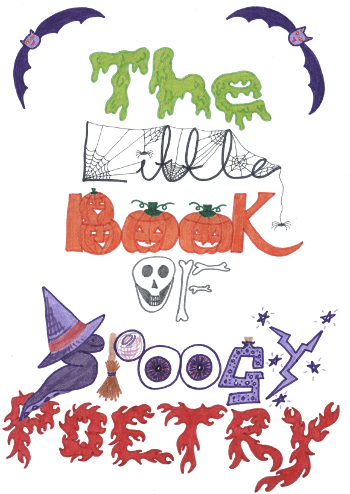
And talking of e-books don't forget to download your copy of The Little Book of Spoogy Poetry before midnight on the 31st of October! Click the image below for your free PDF.

The Little Book Of Spoogy Poetry

Green Unconference 2012 (by )

Saturday I will be running an Upcycle and Junk Art workshop as part of the fantastic programme for the first ever Green Unconference.

This pot of flowers made from an old New Scientist mag, a tin can and a jumper will be on of the things I will be showing people how to make 🙂 Upcycled pot of flowers made out of old New Scientists

I will also have some other bits with me including stuff to make visual poetry greeting cards, collage and maybe a festival sheep (if I can fit it in with the kids in the car!). There are going to be some really cool talks going on at the Unconference so if anyone is in the Bristol/Bath area they should check it out 🙂 Its all free by the way.

WordPress Themes

Creative Commons Attribution-NonCommercial-ShareAlike 2.0 UK: England & Wales